When Life Goes East — pt 4: Facing Anxiety
By ALISHA WISEMAN
"Therefore I tell you, do not worry about your life, what you will eat or drink; or about your body, what you will wear... Look at the birds of the air; they do not sow or reap or store away in barns, and yet your heavenly Father feeds them. Are you not much more valuable than they?... But seek first his kingdom and his righteousness, and all these things will be given to you as well. Therefore do not worry about tomorrow, for tomorrow will worry about itself." — Matthew 6:25–34
21 years ago, sitting on a plane beside my brand-new husband on our way to Australia for our honeymoon, I had my first panic attack.
I’d assumed a three-hour flight was manageable, despite a lifelong history of motion sickness. I was wrong. As the plane took off, the familiar nausea kicked in—but unlike a car, I couldn’t crack a window or focus on the horizon. I felt trapped. My stomach flipped, my chest tightened, and anxiety began to boil over. Too proud to say anything, I tried to suppress it, but it grew stronger. Eventually, I leaned over to Rob and whispered, “I need to get off this plane.”
The look he gave me was part concern, part “I have no idea what to do with this.” My breathing grew faster and shallower. A flight attendant noticed and calmly placed an oxygen mask over my mouth as we descended into the Gold Coast.
That was the first panic attack I can remember. And while I’ve only had a handful since, anxiety has remained a well-acquainted companion—sometimes loud and overwhelming, other times just a low hum beneath the surface.
I share that story not because I’ve mastered anxiety—but precisely because I haven’t.
Even preparing this piece made me anxious. I worried I wouldn’t get the text right, that I might offend someone, or even that I hadn’t experienced enough anxiety to speak on it meaningfully. Maybe you can relate.
Some of us have been told—directly or indirectly—that worry is sinful. That anxiety is weakness. And when we read Jesus’ words in Matthew 6, “Do not worry,” it can feel like a command we’ve failed at before we’ve even begun.
But what if Jesus wasn’t shaming us? What if he was naming something we all carry—and inviting us into something deeper?
We Don’t Talk About It
For many of us, the church has not always felt like a safe place to talk about anxiety.
We’ve often absorbed the idea that worry is something to be prayed away—or kept quiet until we can sort it out with a therapist (preferably off-site). And while we wholeheartedly believe in the power of prayer here at CV, we also believe in therapy, medication, and the wisdom of mental health professionals.
Because anxiety is complex. It’s both natural and sometimes clinical. It’s part of being human in a world that isn’t as it should be. And for some of us, anxiety is an ongoing part of our story.
But the good news? Jesus sees us. And the way he talks about anxiety shows us something surprising.
What If Anxiety Isn’t the Enemy?
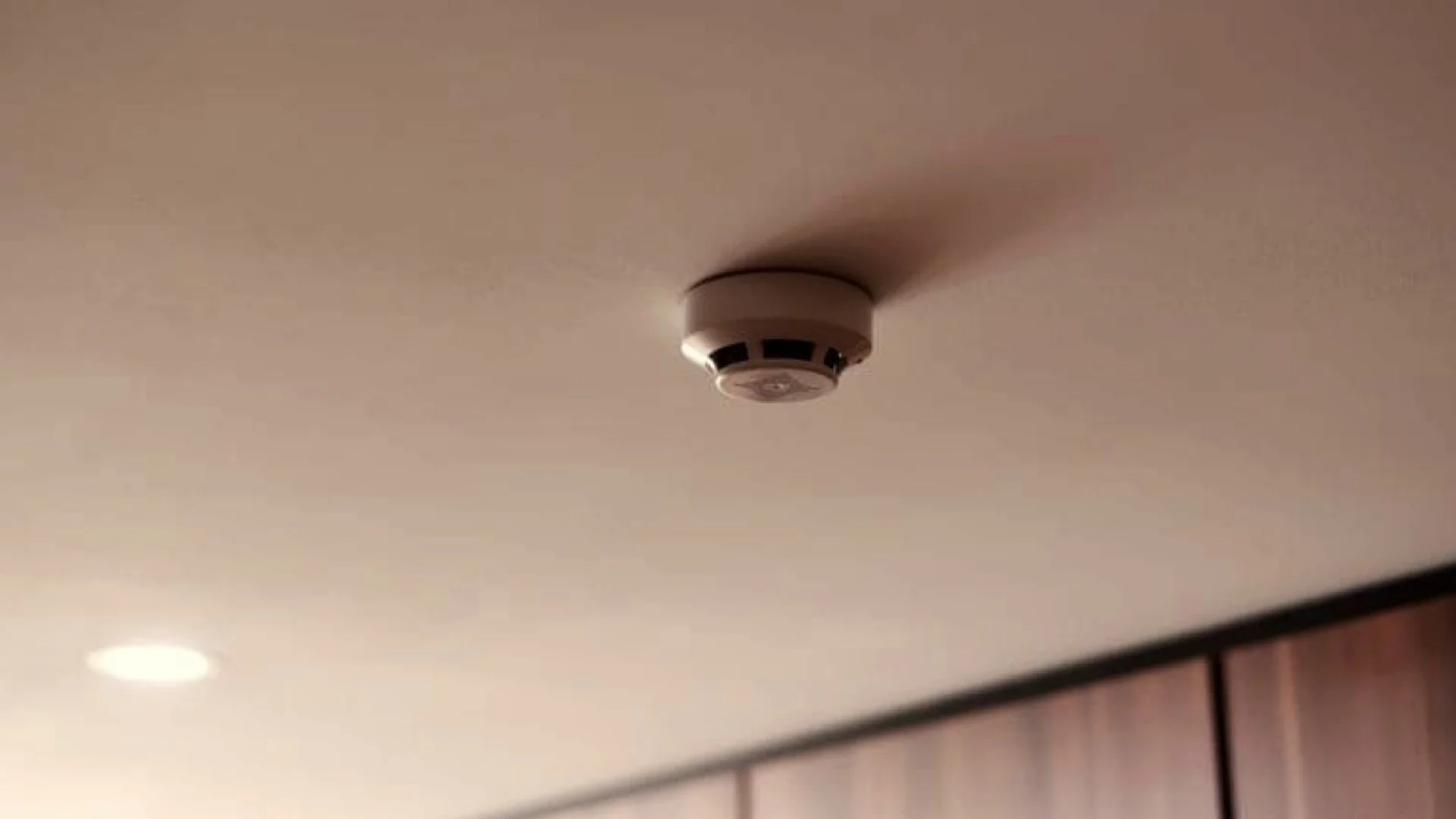
Dr. Curt Thompson, a psychiatrist and follower of Jesus, offers us a different lens. He says anxiety, while painful, is also a signal—a smoke alarm in our lives. When the alarm goes off, we usually want it to stop. But what if it’s alerting us to something deeper?
When we treat anxiety only as the problem—something to numb, fix, or push through—we risk silencing a signal meant to invite our attention. We wave the tea towel at the alarm instead of asking, “What’s causing the smoke?”
What if anxiety isn’t just a disruption, but an invitation?
Curtis Chang writes,
“Anxiety isn’t only a problem we wish would go away. It’s also an opportunity for spiritual growth.”
A Deeper Reading of “Do Not Worry”
Back to Matthew 6. Jesus says, “Do not worry,” not once but three times. Compared to the rest of the Sermon on the Mount, that’s a big deal. Jesus places worry right alongside topics like anger, lust, and money.
Why such concern?
Because worry is sneaky. Worry often sounds like care. It masquerades as love. But it can slowly twist into something more sinister—a convincing lie that God is not trustworthy, and that we are on our own.
This has always been the enemy’s strategy. In the garden, the serpent didn’t outright tell Eve to disobey. He simply asked, “Did God really say…?” A subtle twist. A seed of doubt. A fracture in trust.
Worry works the same way.
Tyler Staton puts it this way:
“Convincing lies are the ones that tell us who we are apart from God, how to fix the world without God's help, what to do with our bodies without mentioning their designer, and what love is while ignoring love’s author.”
Worry Grows from Love—Twisted by Fear
The Greek word Jesus uses for “worry” is merimnaō, which means “to care.” It’s used both positively and negatively in Scripture. Paul uses it to praise Timothy’s genuine concern (Phil. 2:20), but Jesus also warns of the “worries of life” that choke out faith (Matt. 13:22).
Worry, then, isn’t always wrong. It’s care gone sideways. Love hijacked by fear. Henri Nouwen says,
“One of the most notable characteristics of worrying is that it fragments our lives... most of us have an address but cannot be found there.”
Worry pulls us out of the present. It drifts us from peace, from truth, and from home.
So Jesus reorients us.
He says, “Look at the birds.” It sounds almost too simple. But Jesus does this often—he points to creation to remind us of our value. “Are you not much more valuable than they?” he asks.
You are.
You’re more seen, more known, more loved than you could possibly understand.
Leif Peterson, at his father Eugene Peterson’s funeral, said that Eugene had only one sermon, hidden in a thousand ways:
“God loves you. He’s on your side. He’s coming after you. He’s relentless.”
What Are You Really Afraid Of?
Often, the fear we name isn’t the fear we’re truly carrying. We say we’re afraid of failing, but underneath that is a deeper fear—rejection. We fear public speaking, but really we fear being exposed or not enough.
When we trace anxiety to its roots, we often find fear of loss—loss of control, loss of love, loss of safety. And that fear, if left unexamined, can grow until it becomes our new normal.
Jesus says the pagans “run after” these things—food, drink, clothing. But he says, “Your heavenly Father knows you need them.” The difference between us and the world is this: we know the Father. We have a place to anchor our worry.
The Audacity to Believe We Are Loved
At the heart of it all is the question: Do we believe God is good? Do we believe he is for us? Do we believe he sees us and loves us?
Jesus doesn’t say, “Don’t worry,” like a demand shouted across a room.
He says it like a Father sitting next to you on the plane, gently placing an oxygen mask over your face, whispering, “I’m here. You’re going to be okay.”
Anxiety can be the very place we meet God. A place where we learn to breathe again. A place where lies are unwrapped and truth begins to settle in.
When my youngest daughter was three or four, she went through a phase of irrational fears—floods, fires, sharks, and separation at kindy. When she got scared, she would walk in circles, crying uncontrollably. My words—“You’re okay. It’s not going to flood”—didn’t help. But when she let me hold her, and I whispered, “Mumma’s here. Mumma loves you,” the storm would start to still.
The fear didn’t always disappear. But my presence changed how she faced it.
That’s the peace Jesus gives. Not an escape from trouble—but his presence in the midst of it.
Jesus doesn’t promise quick fixes. He offers something better. He offers himself.
NEXT WEEK WE’LL EXPLORE TOOLS FOR HOW TO PRACTICE HOPE IN THE MIDST OF ANXIETY