When Life Goes East — pt 8: Facing the Wall
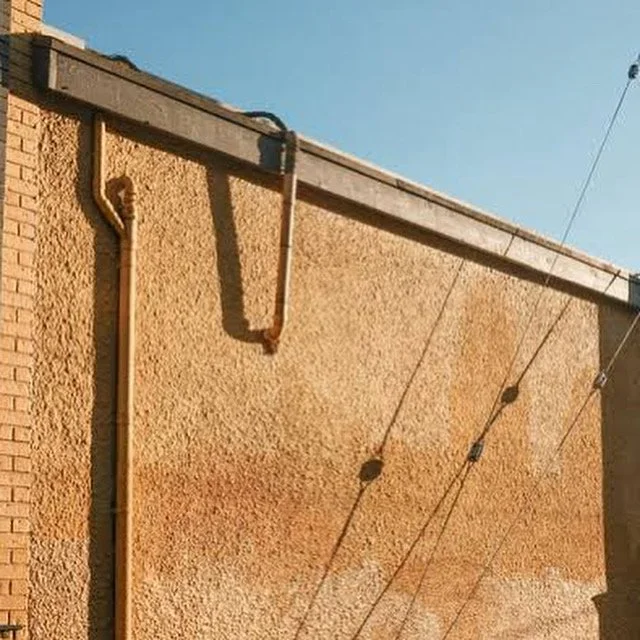
By Dan Sheed
Last year a friend took me on a hunting trip in the Ruahine Ranges.
The first day was a big climb. We ground our way up to the tops, hour after hour, and finally camped for the night, tired but in good spirits. The next morning, though, was a different story. We had to descend off the ridge into a valley to reach a hut. At first it was fine, but as the hours wore on the burn in my thighs got worse, my knees started to wobble, and the endless drops and tree roots became punishing.
At one point I found myself thinking: I don’t think I can do this.
I wanted to go back to the tent. I wanted to go back to the ute. I wanted to go home.
I had hit the wall.
We all know that feeling. Maybe it’s been in the middle of a run or at the tail end of a work deadline. Maybe it’s been in late-night study sessions, or in a strained relationship. Hitting the wall is that moment where every fibre of your being says, I just want to quit. I just want out.
But what about when it happens in our faith?
A Journey, Not a Project
The language of “journey” is one of Scripture’s great metaphors. Jesus calls people to “come, follow me”—a journey of discipleship. To be a Christian is not to hold a static label but to be on the road of transformation, becoming like Christ if He were us.
The trouble is, we often reduce faith to something else: a set of beliefs, a church we attend, a series of projects we complete. Learning, serving, praying, achieving—these things matter, but they’re not the destination. They’re scenes along the way.
We forget that we are the project. The journey is one of becoming people who live in loving union with God and with others, sharing His life of love.
The Degrees and Stages of Love
The Christian tradition has long reflected on this journey. About a thousand years ago, St Bernard of Clairvaux described four “degrees of love”:
Loving yourself for your own sake.
Loving God for your own sake (because of His gifts).
Loving God for God’s sake (delighting in His goodness).
Loving yourself for God’s sake.
Few of us reach that fourth degree this side of eternity. Bernard himself wrote, “I doubt if this degree of love can be perfectly attained… but when it shall be, then God will be all in all.”
Building on this, Janet Hagberg and Robert Guelich, in their book The Critical Journey, describe six stages of faith:
Recognition of God – awakening to God’s reality.
The Life of Discipleship – learning, growing, full of zeal.
The Productive Life – serving, leading, achieving.
The Journey Inward – deeper transformation of the heart.
The Journey Outward – living out of God’s love with new freedom.
The Life of Love – union with God where love flows without effort.
Here’s the key: between Stage 4 and Stage 5 lies the Wall.
They write, “The Wall is a deeply personal experience, unique to each of us, yet it is the most universally experienced part of the journey of faith. … We will hit a Wall. The only choice is whether we will face it and be transformed, or avoid it and remain stuck.”
What Is the Wall?
The Wall is when the old ways of connecting with God stop working.
You pray, and it feels like silence.
You read Scripture, but the words seem flat.
You show up to worship, but nothing stirs.
You serve, but it drains instead of gives life.
Sometimes the Wall comes with crisis—illness, loss, disappointment. Other times it’s a slow fading of joy, a dull emptiness.
St John of the Cross called it the dark night of the soul: “The soul is left in darkness, without light or guide, unable to advance as it did before.”
Mother Teresa lived in this dark night for fifty years. In her private journals, she confessed, “In my soul I feel just that terrible pain of loss—of God not wanting me—of God not being God—of God not really existing.” And yet she never stopped serving, never stopped showing up.
If that sounds familiar to you, hear this: you are not failing. You are not faithless. You are being invited deeper.
And if you haven’t experienced this yet—just wait. Every saint who follows Jesus long enough eventually arrives at this place.
Why Does God Bring Us to the Wall?
It can feel like abandonment. But St John of the Cross insists: “God is not absent in the dark night. He is closer than ever, though hidden, stripping away supports that are not truly him.”
At the Wall, illusions get dismantled. False beliefs like:
If I’m good enough, I’ll be blessed.
If I pray enough, life will go smoothly.
If I serve enough, I’ll be rewarded.
If I’m faithful enough, God will always feel close.
The Wall is God’s mercy. It strips us of these crutches so that our prize is no longer activity, but God Himself.
What Do We Do at the Wall?
When we hit the Wall, everything in us wants out. We want to go back to early zeal. We want to pretend it’s not happening. We want to distract ourselves. But the only way is through.
Here are a few guideposts:
Name the pain honestly. The Psalms give us permission to cry, lament, and rage. Don’t hide your weariness.
Release control. Jesus prayed, “Not my will, but yours be done.” That prayer of relinquishment is our anchor.
Stay with God in silence. When words feel empty, silence and stillness can hold us.
Stay in community. Lash yourself to others for a season. Let people carry you when you cannot walk.
Take the next step you can. Sometimes it’s just ten steps further, like I did in the Ruahine descent. Sometimes it’s showing up for prayer tomorrow, even if today felt dry.
Beyond the Wall
The good news is that the Wall isn’t forever. It isn’t the end—it’s the gateway. On the other side lies freedom, peace, and a love that flows without striving.
St John of the Cross put it this way: “In the dark night the soul is inflamed with love. Though it seems to have lost all, in truth it gains all, for it learns to love God without needing anything in return.”
Pete Scazzero says it plainly: “The Wall is God’s way of rewiring our lives, from living out of our false self to living in our true self in Christ.”
So if you’re at the Wall today—if prayer feels empty, if faith feels thin—don’t go back to the tent. Don’t go back to the car. Don’t go home.
Keep going.
Because beyond the Wall is deeper love.